The most striking thing about Zoe’s art is its confidence. She’s already pared down the number of topics, colours, and styles in her work - while retaining its youth and playfulness. Zoe is also one of the most process-focused indie creators I know. We chatted about her artistic voice, discovering herself and her market, and the technicalities of getting artwork printed. Dive in - it’s a great interview!
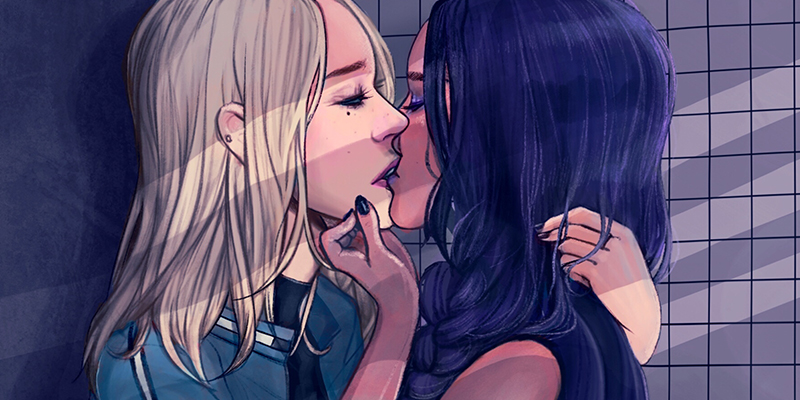
I live a sad gluten-free life... so over a vodka-lime-soda, I would tell you that I draw pretty girls.
If forced to make small talk (ugh) I would tell you that my day-job is as a graphic designer, specifically in print design.
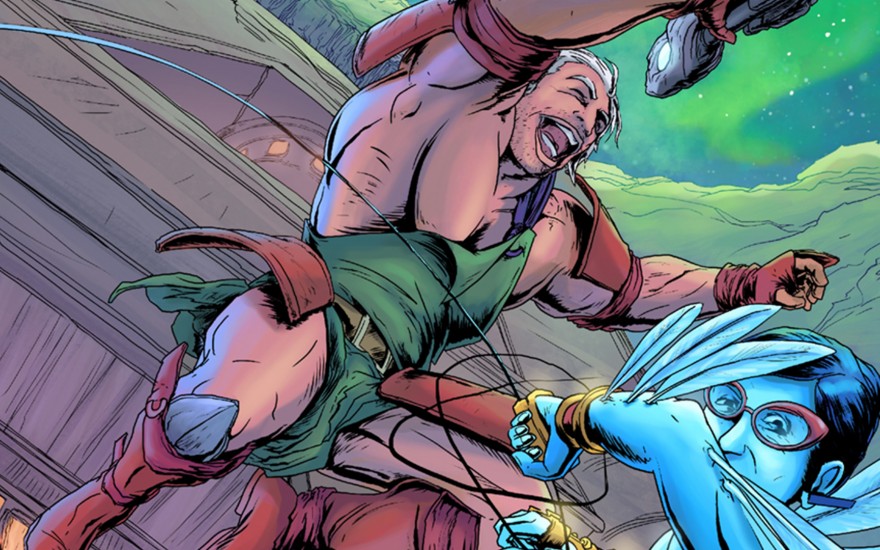
If I decided you were cool, I might tell you that in my downtime I draw my own comics and do freelance illustration. But now you know too much.
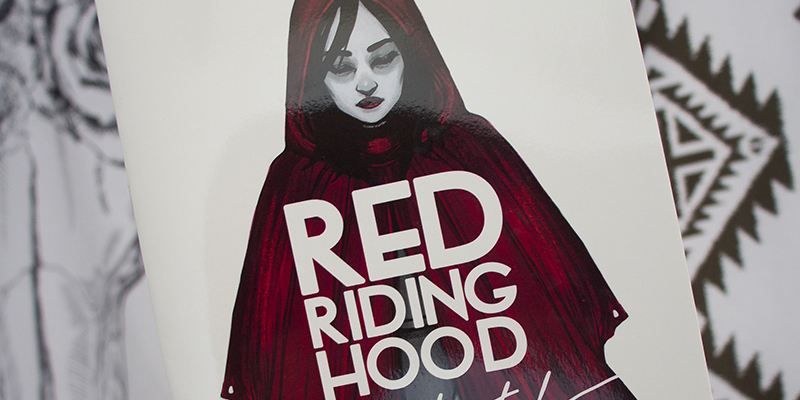
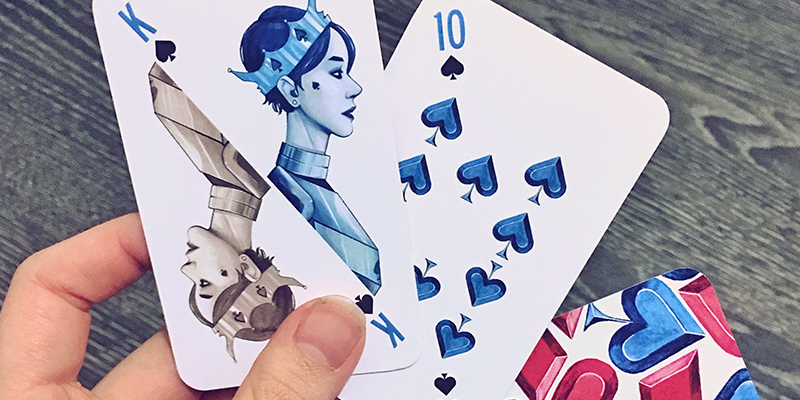
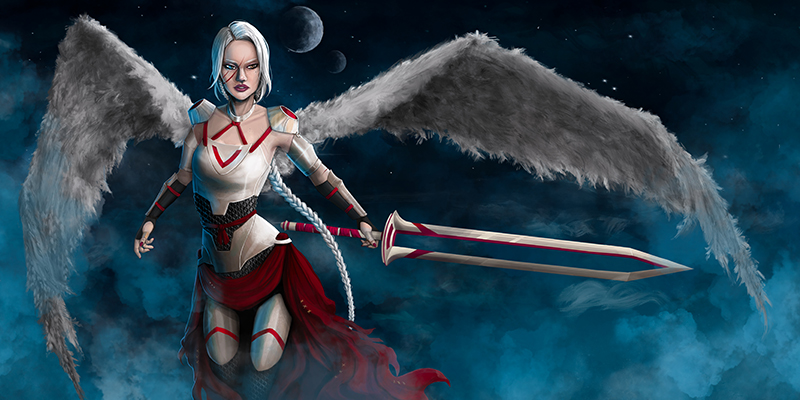
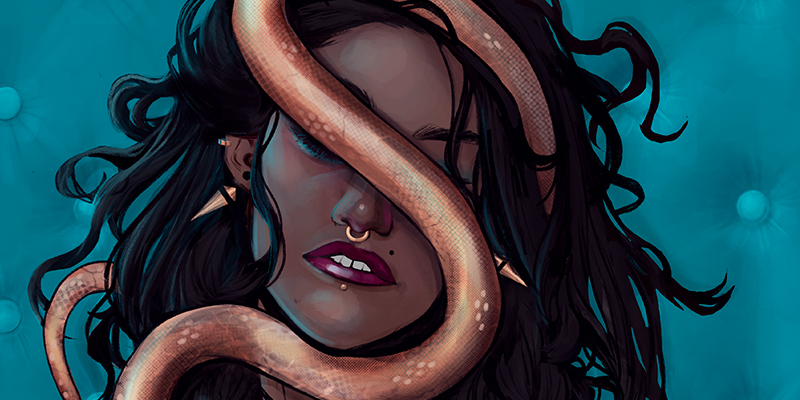
I would say that most of my personal work is a self-indulgent mix of things I love - pretty girls, knives, bad puns and jewel tones. It wasn’t until I browsed my own Instagram that I realised that I apparently only use like five colours. What can I say? I know what I like.
I can definitely say I wasn’t always so comfortable in my style and work.
For a long time I wasn’t comfortable calling myself an “artist”. That word has so many connotations I didn’t feel ready for. However, I realised that when you’re learning art, no one will ever come up to you with a seal of approval and declare that you are “ready”.
While I am my own most cutting critic... when it comes down to it, I back myself.
Eventually - after you’ve studied, failed, and triumphed enough - you get to a point where you can say “Hey, if someone else drew this I would say it’s pretty good”.
While I am my own most cutting critic... when it comes down to it, I back myself. I gave up a long time ago on giving those dramatically-humble-bordering-on-self-deprecating responses that a lot of people expect when they compliment art.
You like that piece of mine? Awesome, I worked hard on it.

Most of my updates go to Instagram first then Facebook, Tumblr, and Twitter. Instagram is designed as an image-sharing platform, and my originals do a little better there. For the other platforms, which rely on sharing, I like to push my rare fan art instead. Each platform has its benefits.
I’m looking to release my most recent comic digitally soon, and I will be restocking Junky Comics with print copies. I hope to open a full online store, so look out for that. I’m very excited.
Overall, I suggest making yourself available in a whole network of places, and try to establish at least a loose brand and getting a feel for how you like to interact with your audience.

You can’t know how something’s going to bounce off your audience until you throw it at them. You never know what the tides of the internet may do. My average Tumblr post, for example, gets 10 notes... but that one piece of throwaway Korra fan art I did for uni..? It was up to 8000 notes last time I checked.
If you keep putting stuff out there, eventually something will stick. Hopefully you’ll start to see a pattern which you can put to work for you.
Also! If you use Instagram, turn your account into a “business account”. You get all sorts of cool graphs and analytics to see who likes your stuff and which pieces are doing the best. It is both handy and fascinating.
While I have always loved comics and have come across some incredible stories... I’ll admit that I am something of a vain comic reader. For me, a comic is an art book first and a story second. When I have time to read a comic, I normally prioritise fun art styles and artists I love.
I could go on for hours talking about the amazingly weird things people send to me to print.
No, I can’t print your logo at the size of a bullet point.
No, we can’t gold foil 20 business cards on metallic card by this afternoon.
No, you can’t pay for your pull-up banner in Bitcoin.
I wish these weren’t actual jobs I’ve been asked to do... but here we are.
No, you can’t pay for your pull-up banner in Bitcoin.
So please, allow me to give you my unsolicited Top 5 print tips:
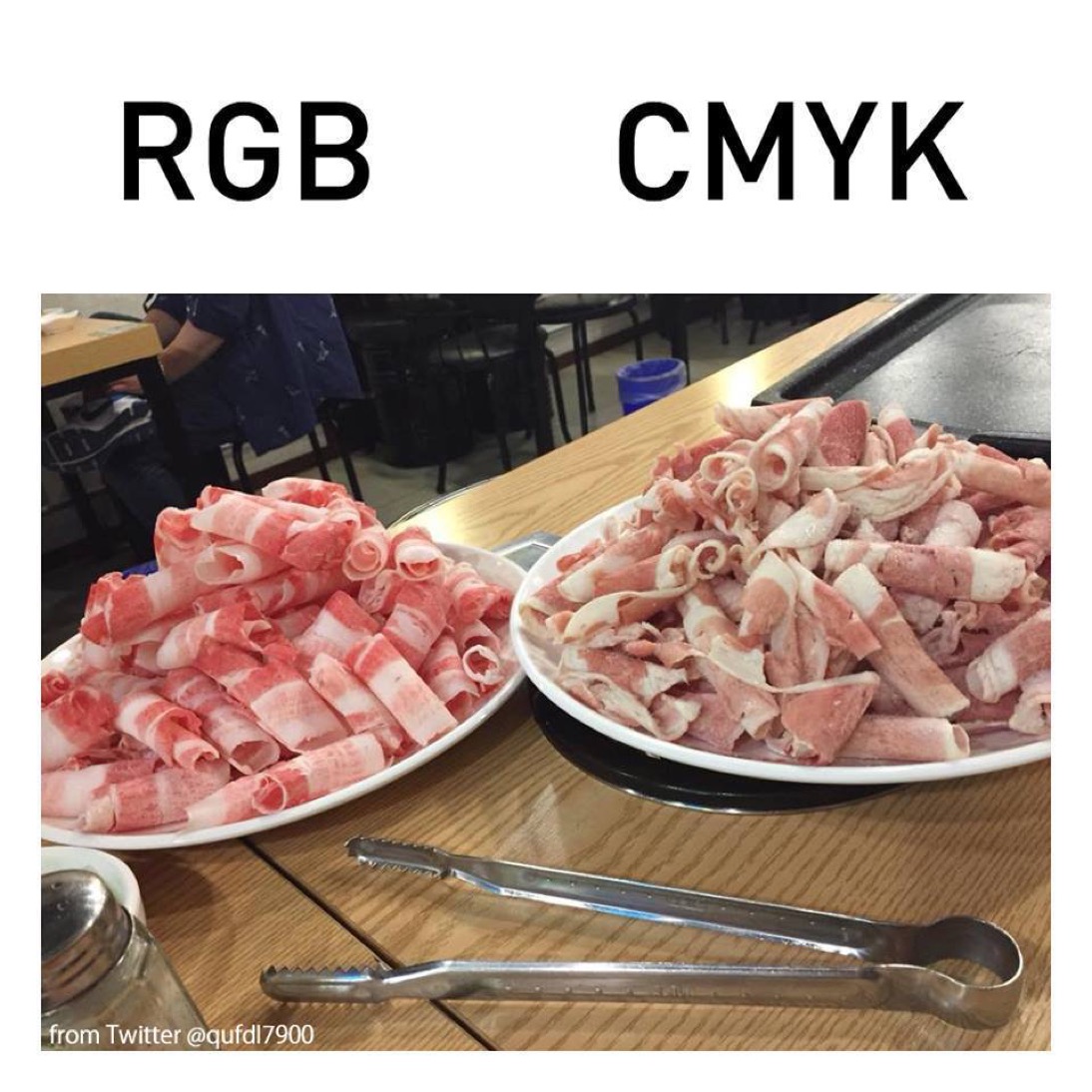
RGB covers everything you see on a computer or phone screen. CMYK is for everything that can be produced by an average printer.
Why do RGBs and CMYKs matter..? Think of all the colours that you can see. Much smaller than that is the range of colours you can show on a screen. Even smallers is the number of colours you can print.
What does this mean for you? If you submit fluorescent-coloured RGB artwork in all its glowy glory, it’s going to come back as a moderately-coloured and possibly disappointing CMYK print.
Sending your file to a printer accidentally in RGB is usually not a big deal. Most printers will accept the file.
RGB also does some wacky and inexplicable things to transparencies. Your printer might notice them in time to warn you - but don’t rely on that.

I think you could get away with either. Maybe start the work in CMYK, and you won’t feel ripped off when the magic print machine can’t print the dayglow orange you had your heart set on.
Funny you ask, Dan. I do indeed work at a printers and naturally we like the chance to print “cool” jobs.
If you’re an artist looking to get printing done, we can get you custom quotes for almost anything. The big things for comic and convention artists are saddle-stitched comics, art prints, stickers, business cards and promotional banners... we specialise in all of them!
If you’re looking to deal with somewhere a little more human than Officeworks or Vistaprint, we’re your friendly local print shop.
Ahh yes. As a designer, I know the burden of Adobe Creative Cloud.
However, until a new industry standard product rules supreme, it’s what we’re stuck with. Budget concerns aside, it’s a powerful software suite, and each app has its own purpose.
Photoshop is fairly self-explanatory. It’s for photos. This means it works with pixels. The more pixels you have, the bigger you can afford to make an image.
Illustrator is a little different. It works with vectors which are basically mathematical formulas. They’re not nearly as terrifying as they sound. Vectors are great because it allows the program to crisply redraw the lines no matter what the size. That means that your vector art will look just as clear on your business card as it would on a billboard.
InDesign is another thing entirely. Imagine if Microsoft Word actually made sense. That’s what InDesign is. While it takes a little while to learn InDesign, it will take what you make in Photoshop and Illustrator, and lay it out so it prints perfectly. For a comic artist, this is where your book will (ideally) end up before being sent off to the printer.
If you can’t afford to get official Adobe software, alternatives are available - some are freeware.
If you live in Brisbane, the State Library’s The Edge facility has an awesome computer lab with all the Adobe programs loaded on them for free!
While they can be a hassle to learn, just the basics can be super handy. Worst case scenario... if you are design- illiterate and would rather focus on making art, consider enlisting the help of a designer (for a reasonable reward of course). If you are looking to sell your art for serious, then you want to make sure your hard work comes across as well as possible.
Absolutely. My workflow is basically a mirror of that.
I start rough with layouts, which are all done in my painting software (Procreate these days).
After doing my version of the traditional pencils-inks-colours process, I move into Illustrator. This is where I put in my fancier typography and text bubbles.
Finally, InDesign is where I compile it all. If everything has gone to plan, which it usually does, this is where I finalise my panel placements and make sure that all the pages flow together.

My current obsession is a translated comic called Their Story or Tamen de Gushi. It follows two girls’ seemingly one-sided fumbling attempts at flirting, with general slice-of-life cuteness. The art style is beautiful and clean and the storyline is super cute. I love it so much that I bought a print copy I can’t even read... It’s actually a big inspiration that I’d like to fold into my next comic project.
I love it so much that I bought a print copy I can’t even read...
Grab your preferred music device and set it on random - what are the first five songs it plays? No cheating!
Thanks so much for your time and expertise, Zosephine - you’re the best!
Dear readers, you can find more from Zoe on Facebook, Twitter, Instagram and Tumblr.